
Capsicum (Sweet Pepper)
Pollination Solutions
Capsicum annuum

Capsicum crops (Capsicum annuum), also known as sweet peppers, rely on effective insect activity for successful capsicum pollination and consistent fruit development. During flowering, pollen must be transferred within the flower to allow fertilisation and fruit formation.
In greenhouse and protected cropping systems, natural pollinator activity may be limited. Managed bumblebee colonies are commonly used to support reliable pollination within capsicum crops grown under protection.
Zonda bumblebee hives provide reliable pollination throughout the flowering period, supporting consistent capsicum production for New Zealand growers.
Capsicum Flower Biology
- The capsicum flower is hermaphroditic, capable of self-pollination, and produces both pollen and nectar. Bumblebee visits can result in both self- and cross-pollination.
- Pollination by bumblebees is not always desirable — in some varieties, particularly during summer, it can result in coarser fruit.
- Bare stamens and pollen on the stigma generally indicate adequate pollinator visits.
- If flowers are scarce, bumblebees may over-visit remaining flowers. Gripping and vibrating the flower to collect the last pollen grains — buzz pollination — can damage the receptacle, later appearing as cork-like spots on the fruit.
When to Introduce Bumblebee Hives for Capsicum Pollination
For pollination of capsicum (sweet pepper) crops, LARGE colonies are normally recommended.

On delivery, a LARGE colony typically consists of 80–110 worker bees together with the queen and has an expected life span of approximately four to six weeks, depending on crop conditions and colony performance.

The approximate pollination range per hive is around 1,500 m². For smaller growing areas, another hive type may be recommended by your consultant.
Hives should be introduced during the early flowering stage and distributed evenly throughout the greenhouse to encourage effective pollination across the crop canopy.
Bumblebee Hives for Capsicum Pollination
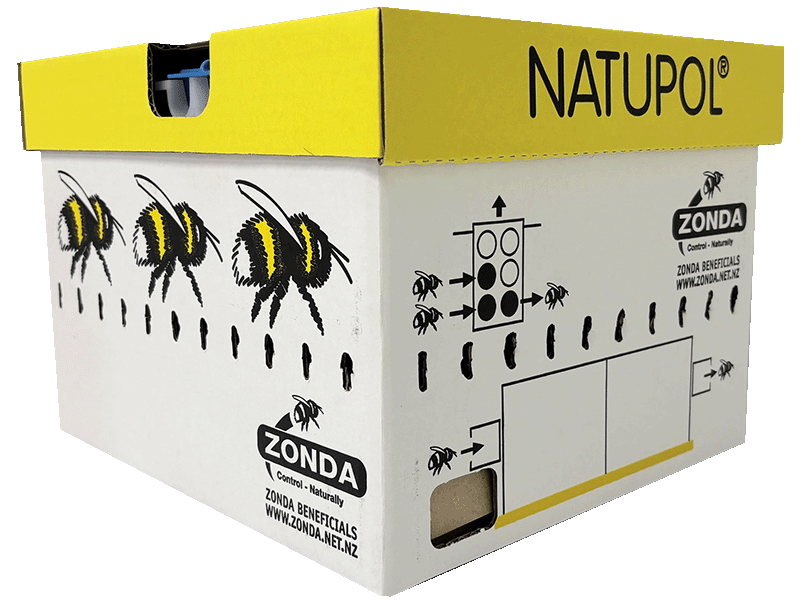
Explore Zonda Beneficials bumblebee hives for greenhouse pollination to support capsicum crop production.
Small Hive
up to 750 m²
Contains approximately 50 worker bees.

Large Hive
1100 m² to 1500 m²
Contains approximately 80–100 worker bees.
Bumblebee Hive Placement and Use
- Introduce colonies when the first flowers are open.
- Place hives on a sturdy support approximately 50 cm above the ground — sunny in spring, shaded later in the season.
- Secure hives to prevent ant access.
- After placement, allow bees to settle for 30–60 minutes before opening the flight hole.
- Bumblebees will begin pollinating shortly after their initial orientation flights.
- Bumblebees are most active between 15–25°C, and will work in temperatures from 10–30°C.
Bumblebee Safety and Crop Protection
- Bumblebees are compatible with natural enemies and biological control programmes.
- Agricultural chemicals can affect bumblebees directly (killing workers or larvae through contact or ingestion) or indirectly (treated flowers may deter foraging visits).
- Systemic pesticides absorbed through roots can have long-lasting effects. In crops that produce both nectar and pollen (e.g. sweet pepper), the impact on the colony can be significantly greater than in pollen-only crops (e.g. tomato).
- Detailed information on pesticide compatibility is available in Zonda’s Side Effects Guide.
- Before any crop treatment, activate the BEEHOME option to allow bees to enter but not leave the hive. After approximately one hour, the hive can be fully closed and either covered or removed from the crop.
- If temporarily removed, store the hive at 18–20°C.