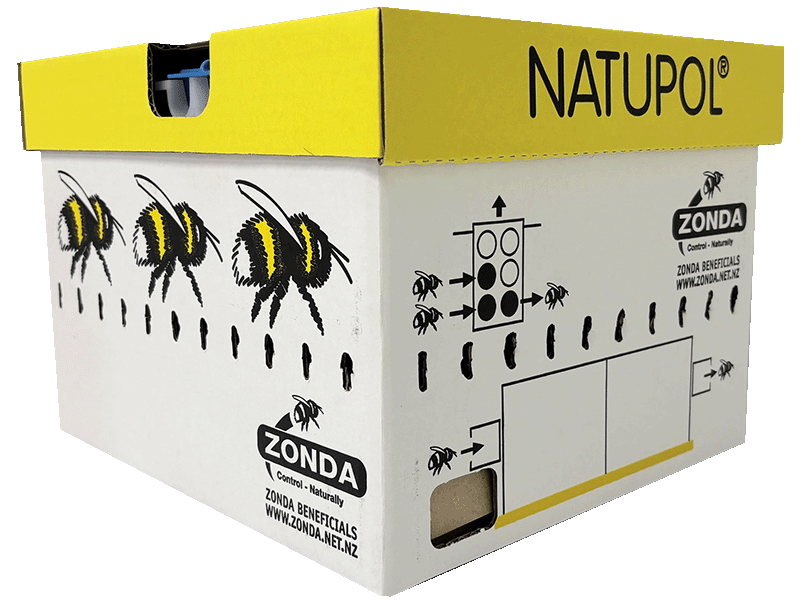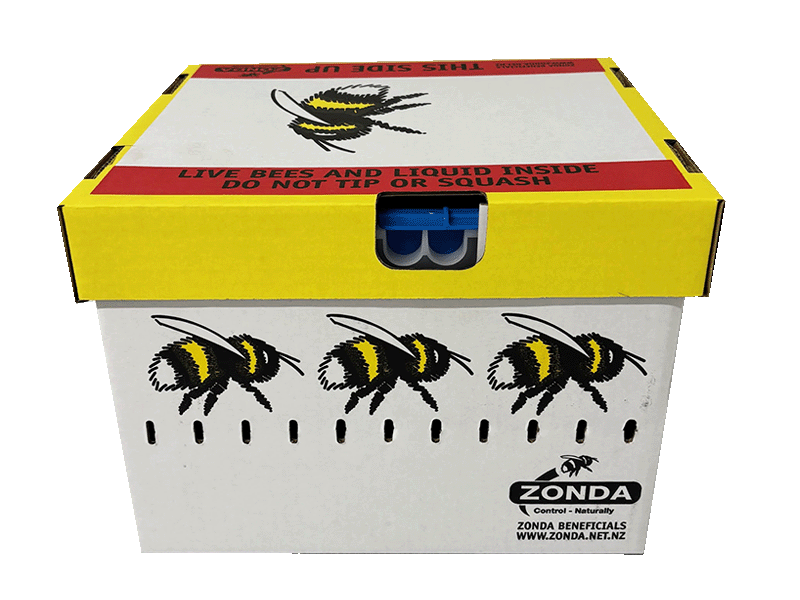
Zonda Beneficials Bee Hive (Small)Zonda Beneficials Bee Hive (Small)

Courgette Small + Pollen

$212.00

Suitable for pollinating area less than 750 sqm.
Small hives contain approx. 50 worker bees and a Queen.

Live products are dispatched Monday to Wednesday only, so they never sit in a courier depot over the weekend. Orders placed after 12pm on Wednesday, or Thursday to Sunday, are dispatched the following Monday.

Placement instructions are emailed to you when your hive is sent, so you can get set up before it arrives.

Bee Hive Usage

** If you are using in conjunction with a wooden bumblebee abode please make a note in the shipping instructions when ordering online. **

Locally Made in Aotearoa New Zealand
Eco Friendly, perfect for the environment

By leading experts in natural pollination and pest control
Only bumblebee workers and queens can sting, males can not

Useful Information
As a general guide we suggest the following for greenhouse/indoor use;
- less than 750sqm 1x small hive
- 750sqm to 1100sqm 1x medium hive
- 1100 to 1500sqm 1x large hive

Courgette flowers generally produce plenty of liquid nectar which attracts the bees and which makes it unnecessary to provide sugar syrup such as is needed in some other crops.

The pollen of courgettes is stringy and has very large grains, and bumblebees have difficulty collecting it. This means that to maintain the hive vigour you must feed pollen to the hive every couple of days. Zonda provide fresh-frozen bee-collected pollen granules which can be sprinkled on the ventilated section on top of the plastic hive under the cardboard lid. Use about one teaspoon every 1 or 2 days. Store the pollen in deep-freeze.

The pollen we provide is NOT courgette pollen and is NOT designed for pollination, it is a supplement feed for the hive only.

The flowers of courgettes often only stay receptive for one morning and must be pollinated promptly. To concentrate the bees work during this morning period we offer the ‘Zonda bee home’ system which allows you to shut the bees in during the afternoon. They can remain there working up an appetite until you let them out again, either after the vents are closed in the afternoon, or first thing the next morning.

Syrup is provided in the hive but has a lid (cap) on it. Only open the syrup supply if you need to feed the bees while the hive is closed for more than a day (e.g. for spraying). To open the syrup supply, remove the cardboard lid and carefully lift the plastic hive out of the box. You will see the syrup wick nozzle on one edge of the brown cardboard holder. Take the little plastic cap off the top of the wick nozzle and replace the hive back in the carton. Make sure the plastic door is on the outside of the box. To shut off syrup supply, simply place the plastic cap back on the nozzle.

Each hive is guaranteed to last for between 4-6 weeks. The hive will naturally die off at this stage. A new hive would need to be introduced if the crop is still flowering.
Instructions for use

Placement instructions are emailed to you when your hive is sent, so you can get set up before it arrives.

1. Place the hive on a sturdy support about 50 cm above the ground – in a sunny spot in spring, and in the shade later in the season.

2. Make sure ants can't get into the hive.

3. Once the hive is in place, let the bumblebees settle for ½ to 1 hour before opening the flight hole.

Good to know
- Drones (male bees) are most active in the morning and late afternoon.
- Drones can be sensitive to strong-smelling crops such as onion and leek, which can reduce their activity. Keep ventilation good to avoid this.
Crop protection
Combining the use of bumble bees with natural enemies does not present any problems.

Agricultural chemicals may have direct or indirect effects on the bumble bees. Direct effects occur when worker bees and larvae die as a result of contact with or digestion of a chemical product, indirect effects occur when the smell of the treated flower puts off the bumble bees, causing visits to stop.

Systemic pesticides (pesticides that are absorbed through the roots) often have a long-lasting residual effect. If a flower produces nectar in addition to pollen (e.g. sweet pepper), the damage to the bumble bee population may be much more serious than in a crop that only produces pollen (e.g. tomato).

You will find detailed information about persistence and compatibility of pesticides with bumblebees and most other beneficials online at Koppert’s website: www.koppert.nl

In all cases the BEEHOME option of the hive must be activated before the crop is treated. This option ensures that bumble bees can enter, but not leave the hive. After about an hour the hive can be closed completely, so that it can either be covered or removed from the crop.

If the hive is temporarily removed from the crop, it should be stored at 18 to 20 degrees Celsius.
Shipping and charges
Freight calculated based on weight and delivery zone - please read our section on delivery.

If we experience any unexpected delays or stock shortages one of our team will contact you as soon as possible.

3% surcharge applied for credit card purchases.

Additional information

Weight 2.49 kg
Dimensions 25 × 29 × 20 cm